INR18650: reading battery nomenclature
A cell stamped INR18650 is not chosen the same way as one stamped ICR or IMR, even though all three drop into the same bay. The code combines two separate pieces of information, chemistry and format, and confusing the two leads to a poor choice or to a real hazard. This sheet sets out what each letter means and how to read a cell label without guessing.
INR18650: what the letters and the digits mean
The code on a cylindrical cell follows a scheme set by the International Electrotechnical Commission. It reads in two blocks: a prefix of one to three letters for the chemistry, then five digits for the format.
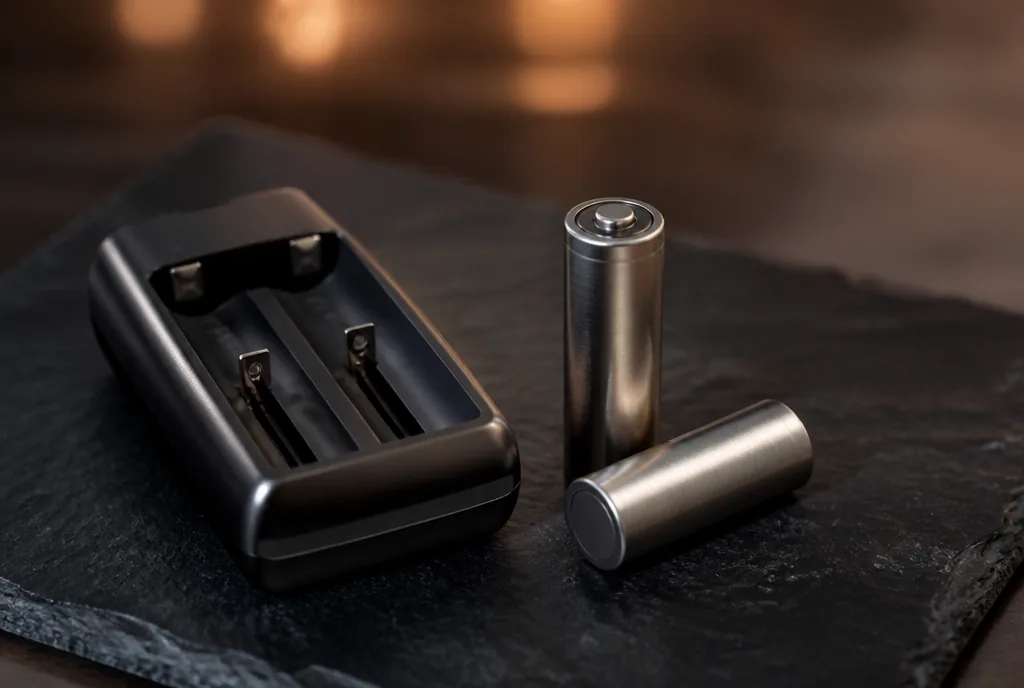
In INR18650, the I signals a lithium ion base, the N indicates nickel in the cathode, and the R means a cylindrical shape. The digits that follow give the format: 18 mm in diameter, 65.0 mm in length, and the final 0 marks a standard cylindrical body rather than a flat one.
The same scheme applies to every cell size used in vaping. A 20700 measures 20 mm across for 70.0 mm long, a 21700 measures 21 by 70.0 mm. The digit count never changes: five, always in the same order, which is what makes the code readable at a glance once you know the pattern.
The other common prefixes: ICR, IMR and NCR
Three other codes turn up regularly on cells sold through British shops, and each points to a different cathode material. Knowing them prevents you treating two very different cells as interchangeable because they share a size.
The C in ICR stands for cobalt, in a lithium cobalt oxide cathode. That chemistry offers high capacity for a given volume but tolerates heavy current draw poorly: it runs warmer and its thermal safety margin is narrower.
The M in IMR stands for manganese, in a lithium manganese oxide cathode. It handles heavy current demand better than ICR, at the cost of somewhat lower capacity for the same format.
NCR is not a generic IEC code at all. It is a manufacturer designation used by Panasonic, formerly Sanyo, for its nickel cobalt aluminium cells. You meet it on high capacity cells designed for lighting or computing rather than for high current use, which is exactly why it is easy to buy by mistake.
Why INR18650 dominates vaping hardware
The INR18650 combines nickel, manganese and cobalt in a single cathode, a chemistry often labelled NMC. The mix aims at a compromise between the opposite weaknesses of ICR and IMR: acceptable capacity without giving up current capability.
That compromise explains the place INR cells hold among manufacturers who specifically target the vaping market, Samsung, LG and Sony Murata chief among them. A mod with removable cells, such as a dual cell rugged box mod, draws brief but heavy currents that an ICR cell alone would handle badly.
Chemistry does not describe everything about a worn cell, though. Signs of fatigue, such as a low voltage warning that returns right after a full charge, affect the INR18650 exactly as they affect any other chemistry once internal resistance has degraded.
How to read an 18650 label in detail
Beyond the chemistry prefix, a cell label carries three further values that must be read separately rather than blurred into one impression of quality.
Capacity, in mAh, states stored energy. A higher figure on the same format almost always conceals a lower continuous discharge rating: it is a physical trade off rather than a marketing choice, and treating a big capacity number as an all round improvement is the classic beginner error.
Nominal voltage and charge voltage come next. An INR18650 shows a nominal voltage close to 3.6 or 3.7 V and a maximum charge voltage of 4.2 V. Those two reference points govern the choice of a charger for the format, which must never exceed the charge voltage the maker states.
The continuous discharge rating, in amps, is the third. It is the value the manufacturer publishes as sustainable without exceeding the cell’s temperature limit. It appears on the maker’s own datasheet for that exact reference, and never on generic packaging or an unsourced shop listing. Reading it there, rather than anywhere else, is the whole method.
Two more label details matter in practice. The full reference usually carries a suffix after the base code, naming the generation or variant, and that suffix is what you search for when looking up the datasheet. And the terminal shape, flat top or button top, has to match what the mod expects, which the mod’s own manual states.
Safety: what to check before using an INR18650
The INR chemistry reduces certain risks compared with ICR, it does not remove them. Several rules hold regardless of the brand on the wrap, and none of them involves a number you have to work out.
A cell with a torn, split or lifting wrap, the insulating plastic sleeve, must never be used, not even briefly. The exposed metal can sits at the negative pole, so it can create a short circuit on contact with a coin or a key in a pocket. Rewrapping is a job for someone equipped to do it properly, not a field repair.
Transport always happens in a dedicated rigid case, never loose in a pocket alongside other metal objects. It is the simplest precaution and the most frequently skipped one.
Two cells used side by side in a dual cell mod must be matched: same brand, same model, same age, bought together and recharged together. Mixing mismatched cells unbalances the charge between the two and works the weaker one hardest.
Finally, the current a setup draws must never exceed the continuous discharge current the cell manufacturer states for that reference. That value is read on the datasheet, not estimated, not inferred from a similar cell, and not taken from a figure passed on without a source. Cells that reach the end of their life go to a battery collection point, and many British retailers that sell them take them back.
Frequently asked questions
Is an INR18650 compatible with every mod that takes removable cells?
The 18650 format has to match the bay, which it does on most recent single and dual cell mods. Format compatibility says nothing about the maximum power supported, which depends on the mod’s chipset and on the cell itself.
How do you tell a flat top from a button top?
A flat top has a flat positive terminal, level with the body of the cell. A button top carries a small raised nub on the positive terminal. The format the mod expects is stated in its manual.
Can a 20700 or 21700 replace an 18650?
No, unless the mod comes with an adapter provided by the manufacturer. The wider diameter of a 20700 or a 21700 will not fit a bay sized for 18650.
Does a letter after the base code change anything?
A suffix designates a manufacturer variant: a generation, or integrated protection on some industrial models. Refer to the specific datasheet for that full reference rather than to the prefix alone.
Do protected cells exist for vaping?
Protected cells exist but the protection circuit lengthens them beyond the standard format, which often prevents them fitting a vaping mod. Almost all cells sold for vaping are unprotected, which is precisely why the handling rules above matter.
Reading an INR18650 before you buy it
The INR18650 code tells you a chemistry, nickel manganese cobalt, and a format, 18 by 65 mm, and nothing more than that. Capacity, voltage and continuous discharge rating are read separately, on the cell manufacturer’s datasheet rather than on a retailer’s packaging.
That methodical reading avoids two symmetrical errors: underestimating a cell that would comfortably run a demanding setup, or pushing one beyond what its own datasheet allows. On vaping hardware with removable cells, it is that label, far more than the brand on the mod, that sets the real safety margin.
Editorial content for adult readers only. Vaping products usually contain nicotine, a substance that causes addiction. Not for sale to under-18s in the United Kingdom. This article is not a buying recommendation.